About encaustic art
Materials statement
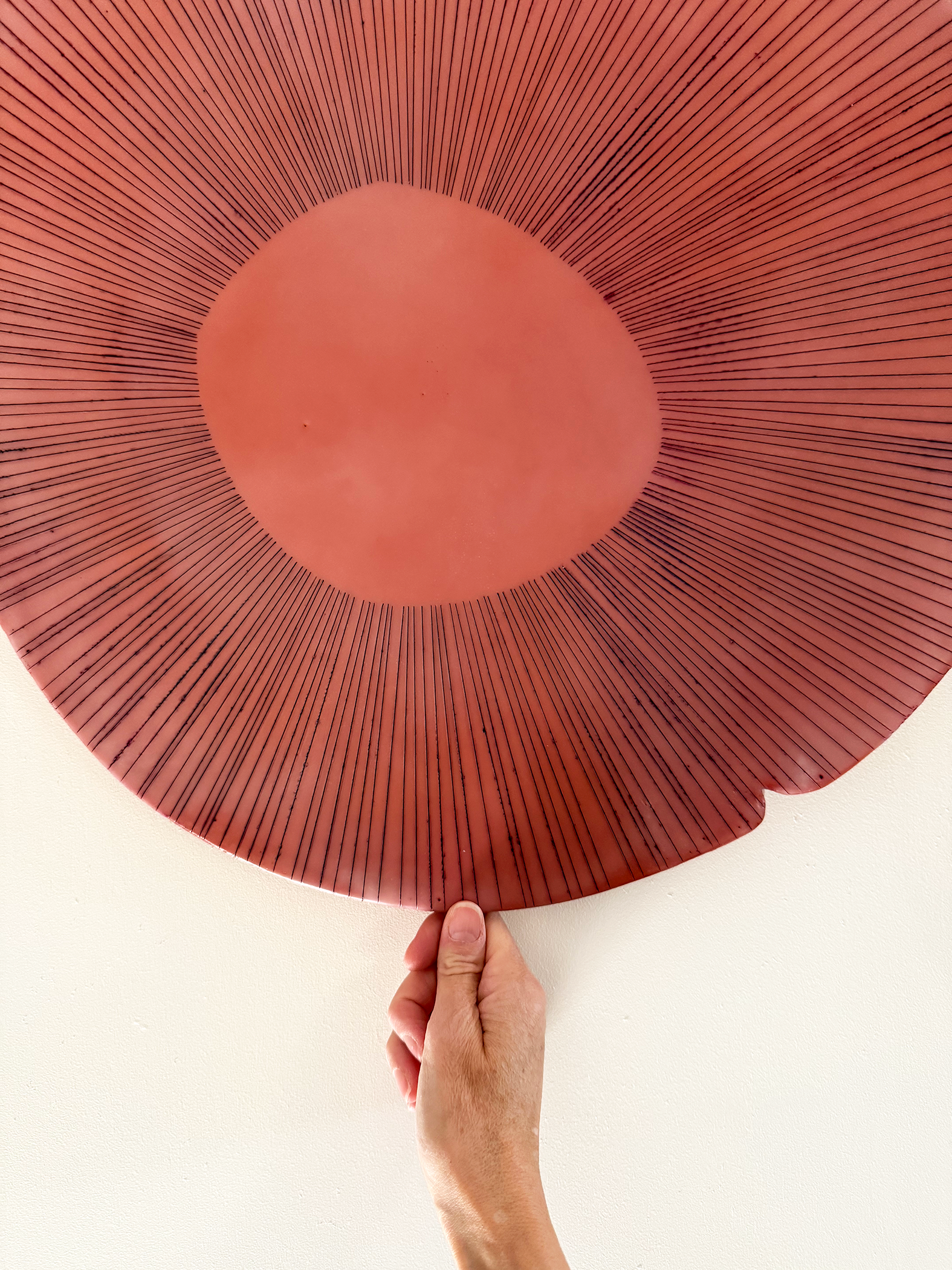
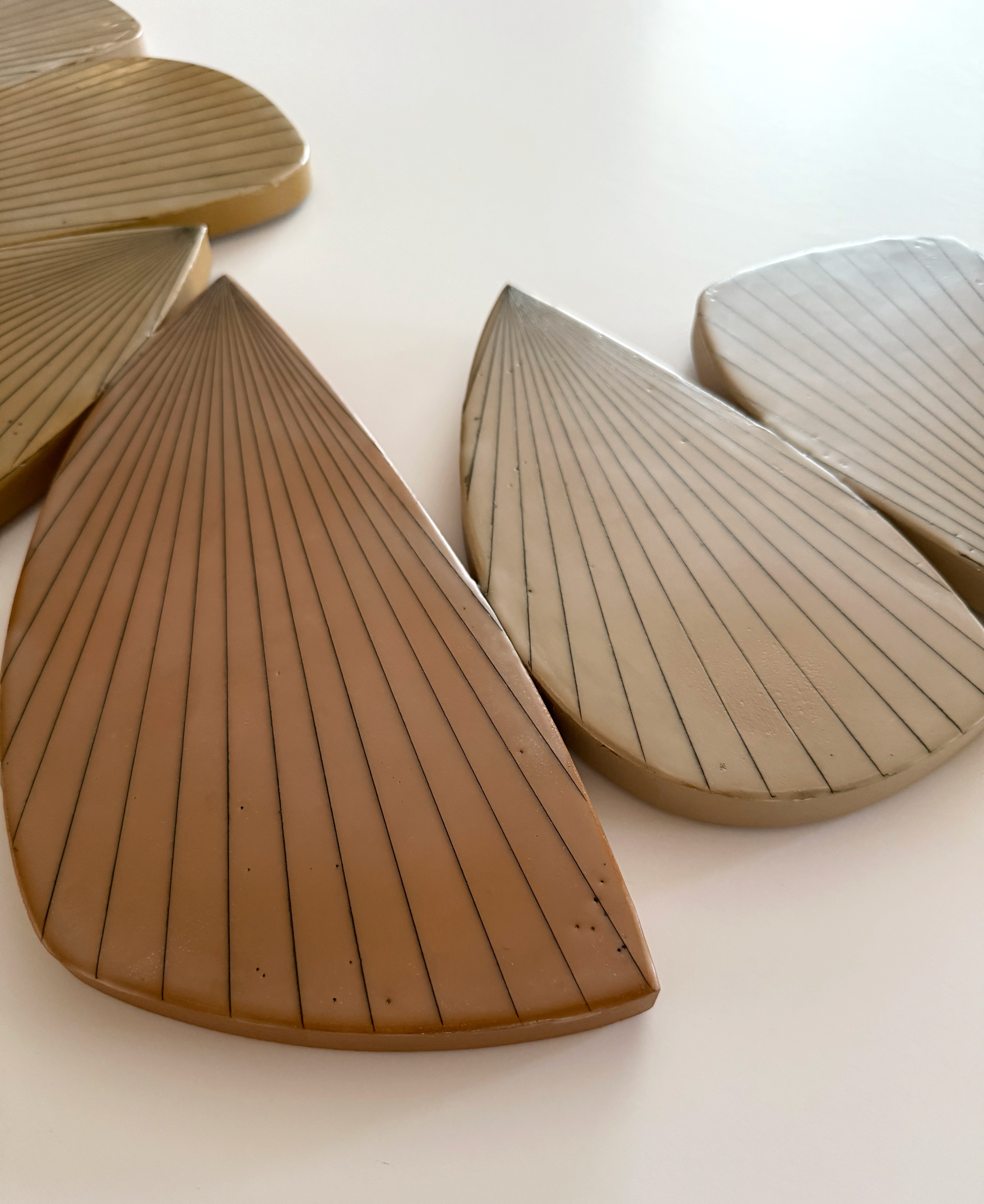
Jamie Gray is an installation artist who transforms shaped wood panels into distinct pieces by fusing and layering encaustic wax – a blend of pigment, beeswax, and tree resin - on their surface. Encaustic art is a historic technique that dates to ancient Egyptian art, around 100–300 AD. It is highly archival and colorfast; it resists moisture and does not yellow.
The wax provides a deep, luminous quality and can be polished to a shine. The wax’s unique properties mean the artwork’s hue and surface reflection change with viewing angle and lighting conditions. Gray enhances the supple wax surface through her repetitive mark-making process, adding textures and abstract motifs. She intentionally connects her artistic practice to her love of nature by using natural, renewable materials and employing slow, handcrafted techniques.
Handling
Treat encaustic art like any other piece of fine art. While the hardened wax surface is very robust, it can still scratch or chip if you don't handle it carefully.
Wear cotton gloves when handling art to prevent oils, dirt, and dust from transferring to the panels. If moisture or fingerprints appear, gently buff the surface clean with a soft, clean cloth.
Temperature
STORE and TRANSPORT: When shipping encaustic art, insulate against temperatures under 40°F and over 80°F.
HANG encaustic art indoors and avoid placing it in areas exposed to continuous intense heat or freezing temperatures. Once installed, the optimal room range is 35°F to 120°F. Encaustic wax has a melting point of 150°F.
Cleaning
Encaustic art does not require varnishing or protection behind glass; however, like glass, the surface can dull over time due to normal air exposure. You can renew the glossy sheen by gently buffing the surface with a soft, clean cloth. Do not use soap or chemical cleaners.
The wax is an organic material, and as it cures over the first 12 months, the artwork may develop “bloom,” a naturally occurring hazy residue. This may be more apparent on dark colors, in colder temperatures, or after long-term storage. You can renew the glossy wax luster by gently buffing the entire wax surface with a soft, lint-free cloth. Initially, you may need to buff the artwork a couple of times, but once the material is fully cured, you shouldn't have to buff it again.
Packing
Always cover the front of the artwork with clean WAX PAPER before wrapping it in protective padding. Never wrap the artwork directly in plastic, such as bubble or plastic wrap, because it will leave an impression on the surface.
Lighting
The artist recommends installing artwork under natural daylight or soft gallery lighting, rather than directional spotlights that create harsh and reflective glare.